Cross Country and Soaring
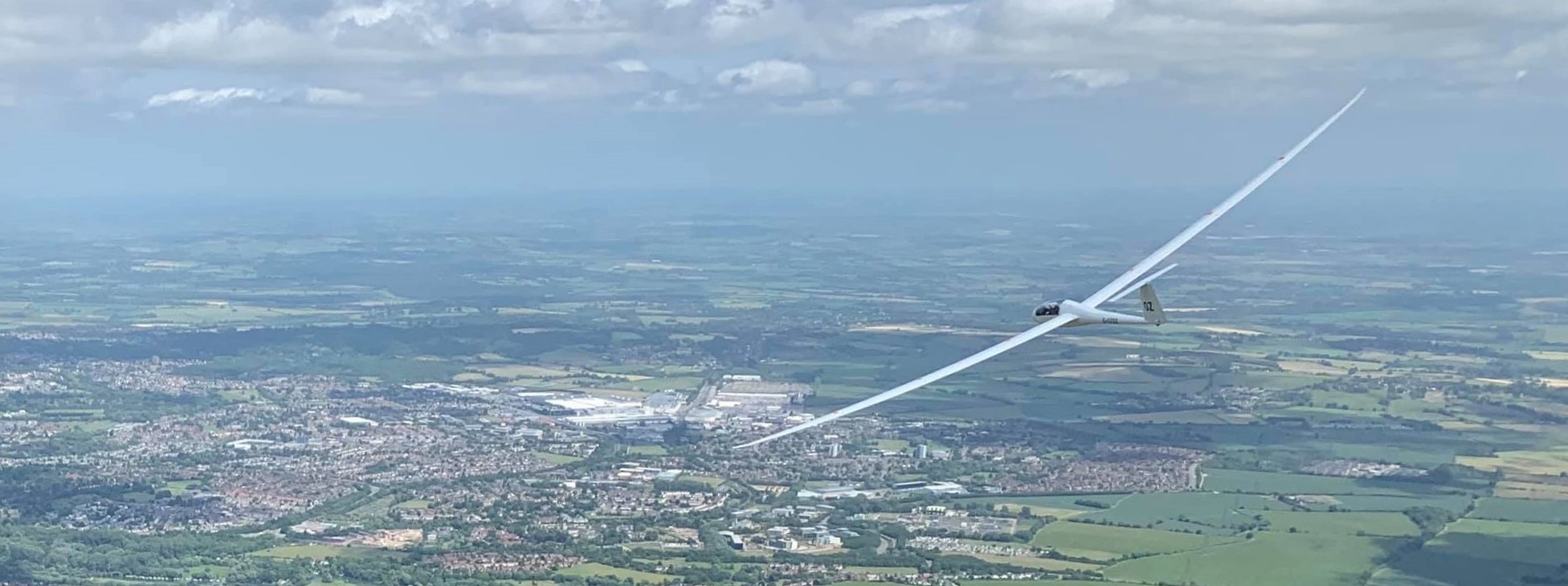
Qualified glider pilots regularly plan and fly cross-country tasks during which they use their experience and soaring skills to exploit rising air and make effective use of their glider’s performance. To many glider pilots, cross-country flying is the main reason they take part in the sport.
How to improve your soaring skills…
Coaching
Pilots who want to try or are new to cross-country flying should seek advice. Coaching may be available at your club, or by arrangement with another club nearby.
Learn about soaring coaching here.
Reading material
Of course much can be learned through reading. There are plenty of excellent publications available, including relevant articles in Sailplane & Gliding magazine.
This video seminar by Mike Fox discusses effective thermal flying techniques.
‘The Soaring Engine’ and Soaring Adventure publications are recommended.
The soaring related sections of the FAA Glider handbook are helpful.
Practicing what you’ve learned
Of course there is no substitute for getting in the air and practicing, practicing and practicing a bit more!
The soaring techniques and skills needed to be a successful cross-country pilot can be developed while flying within gliding range of the airfield. Chat to the more experienced cross-country pilots at your club about mini-tasks that you could achieve in a limited time and within reasonable gliding range of your own or nearby airfields. These mini-tasks will help you learn more about reading the sky, flying efficiently, and making use of the soaring instruments and GPS moving map that will provide the foundations for greater achievements.
Staying safe
Lookout
Please don’t forget that lookout is your highest priority – lookout for at least 80% of the time when flying and don’t allow yourself to be distracted by cockpit equipment. Read more about collision avoidance here.
If flying with others in a thermal makes you nervous, that’s healthy! If in doubt, ask an experienced soaring pilot to help you understand how to fly safely with others. There’s a useful video here.
Airspace
We share the sky with many other users, so please do take time to understand your responsibilities as a pilot. Please take a look at the information on the Airspace webpage.
Comparing performance
While many pilots are quite content to compete against nature, many others choose to fly cross country in competition with other pilots too. You can learn more about cross country competitions elsewhere on this website.
The online ‘BGA Ladder’, where individual pilots can upload details of their flight, the flight is scored automatically and the result can be viewed publicly, is an excellent way of comparing cross-country performance against other pilots.
BGA and FAI Sporting Achievement
The BGA and the international organisation, the FAI, award a series of sporting achievement badges and diplomas. You can learn more here.
Field Landings
Glider pilots do not usually plan to land anywhere other than an airfield. However, they need to be prepared for a field landing. More information is available on the Field Landing webpage.
Task Setting
Setting the right task can make all the difference to the enjoyment and success of a cross-country flight. Learn more here.